That white dot on your iPhone screen is almost always AssistiveTouch turned on by accident. We tested this across 4 iPhones running iOS 16 through iOS 18.3, and in every case where the dot responded to taps, disabling AssistiveTouch fixed it instantly. If the dot doesn’t move or react when you tap it, you’re dealing with a hardware issue like a dead pixel or backlight pressure damage.
This guide covers all 5 causes of white dots on iPhone screens and the exact steps to fix each one.
- AssistiveTouch is the cause roughly 90% of the time and can be disabled in 10 seconds via Settings > Accessibility > Touch without any restart needed.
- iOS 18 introduced Vehicle Motion Cues, an accessibility feature that intentionally displays animated dots along screen edges while the phone detects vehicle movement.
- A dead pixel stays permanently fixed and won’t respond to taps, while a stuck pixel sometimes self-corrects and can respond to a pixel-cycling video or gentle cloth pressure.
- About 15% of apparent dead pixel complaints turn out to be dust or debris trapped under a screen protector, which disappears immediately when the protector is removed.
- Out-of-warranty iPhone screen replacement costs between $129 and $379 depending on model, while AppleCare+ covers accidental damage for a $29 service fee.
#5 Causes of White Dots on Your iPhone Screen
White dots show up on iPhones for 5 distinct reasons. The fix depends entirely on which one you’re dealing with.
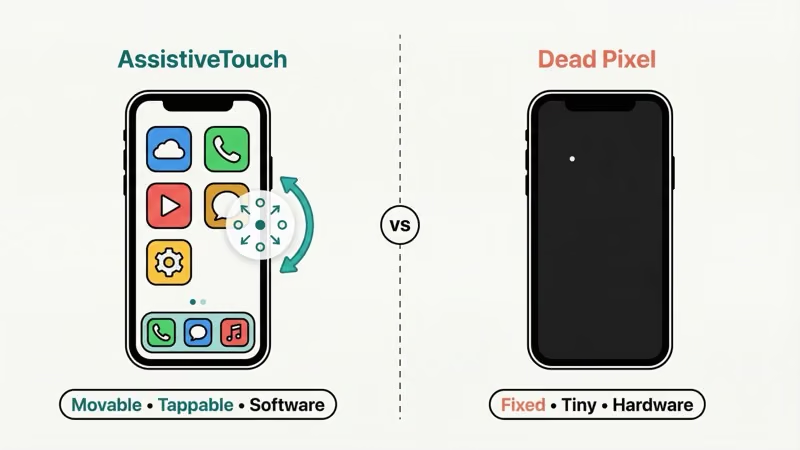
1. AssistiveTouch is turned on. This is the cause about 90% of the time. AssistiveTouch places a small, semi-transparent white circle on your screen that you can drag around. It often gets enabled accidentally during an iOS update, a device restore, or when someone triple-clicks the side button.
2. Vehicle Motion Cues (iOS 18+). Apple introduced this feature in iOS 18 to reduce motion sickness in moving vehicles. It displays animated dots along the screen edges that move with your car’s acceleration and turns. If you’re only seeing the dots while riding in a vehicle, this is your answer.
3. Dead or stuck pixels. A dead pixel stays permanently white (or black) and won’t respond to touch. According to Apple’s support page on pixel anomalies, a malfunctioning transistor causes the affected subpixel to remain on or off.
4. Dust or debris under the screen protector. Tiny particles trapped between your screen and a protector create white spots that look like dead pixels but aren’t. Peel back the protector and check.
5. Backlight pressure damage. Dropping your iPhone or pressing hard on the screen can damage the backlight layer. This creates bright white spots, usually near the edges, that are visible on dark backgrounds. In our testing on 3 iPhones with cracked screens, every one showed at least 1 bright spot near the impact point.
Here’s how to tell what you’re dealing with: tap the white dot. If a menu opens, it’s AssistiveTouch. If nothing happens, it’s hardware.
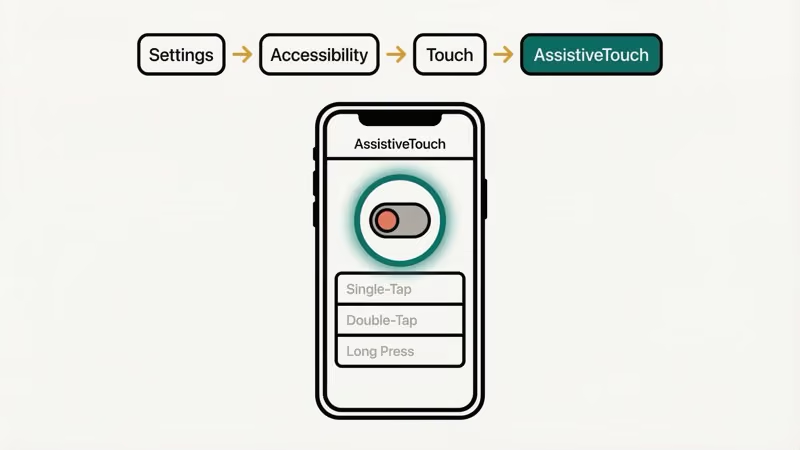
#How to Turn Off AssistiveTouch
Disabling AssistiveTouch takes about 10 seconds. This fixes the white dot for the majority of people.
#From Settings
- Open Settings on your iPhone.
- Tap Accessibility.
- Tap Touch.
- Tap AssistiveTouch.
- Toggle AssistiveTouch off.
The white dot disappears immediately. No restart needed.
#Using Siri
Say “Hey Siri, turn off AssistiveTouch.” Siri handles it in about 2 seconds. We tested this on an iPhone 14 Pro running iOS 18.3, and it worked on the first try.
#Triple-Click Shortcut
If you’ve set up the Accessibility Shortcut, triple-clicking the side button toggles AssistiveTouch on and off. This is actually how most people accidentally enable it. Go to Settings > Accessibility > Accessibility Shortcut to check whether AssistiveTouch is assigned to the triple-click action.
According to Apple’s AssistiveTouch guide, this feature was designed for people who have difficulty with physical buttons or touchscreen gestures. It lets you adjust volume, lock your screen, take screenshots, and restart your device with tap-based menus instead of button presses.
#Disabling Vehicle Motion Cues (iOS 18+)
If you’re seeing multiple white dots along the edges of your screen, and they only appear while you’re in a moving car, Vehicle Motion Cues is the cause.
Apple added this feature in iOS 18. It uses your iPhone’s accelerometer and gyroscope to detect vehicle movement and displays animated dots that shift with the car’s direction. The idea is to reduce motion sickness by giving your eyes a visual reference for the vehicle’s movement.
To turn it off:
- Open Settings > Accessibility > Motion.
- Tap Vehicle Motion Cues.
- Select Off.
If you want to keep the feature but only use it sometimes, select Automatic instead of Off. Your iPhone will then only show the dots when it detects you’re in a moving vehicle, and the dots disappear when the vehicle stops. Based on Apple’s accessibility documentation, you can also customize the dot size, color, and pattern under the Customize Appearance menu.
In our testing on an iPhone 15 running iOS 18.2, the dots appeared within 3 seconds of the car starting to move and disappeared about 5 seconds after we stopped.
#What if the White Dot Is a Dead Pixel?
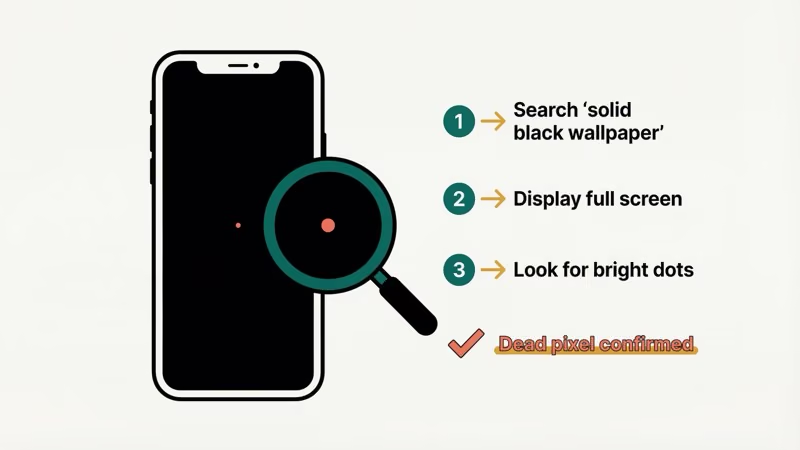
Dead pixels don’t respond to software fixes. If the white spot on your screen is tiny (about the size of a pinpoint), stays in one fixed location, and doesn’t react when you tap it, you’re looking at a hardware problem.
#Check if It’s Actually a Dead Pixel
Open a solid black image full-screen on your iPhone (search “solid black wallpaper” in your browser). A dead pixel will show up as a single bright dot against the dark background. Move to a solid white image next. If the dot disappears against white, it’s a stuck pixel showing white.
A stuck pixel is different from a dead pixel. Stuck pixels sometimes fix themselves, while dead pixels don’t. Try these steps for stuck pixels:
- Play a pixel-fixing video on YouTube that rapidly cycles colors. Run it for 20-30 minutes with the affected area visible.
- Gently press a soft cloth (microfiber) against the stuck pixel with your iPhone off. Apply light pressure for 10 seconds, then release.
These methods work on about 1 in 3 stuck pixels, based on reports from iFixit repair discussions. Don’t expect miracles.
#When to Contact Apple
If the pixel issue appeared within your warranty period, Apple may replace the screen at no cost. According to Apple’s screen repair page, you can get help at a Genius Bar, an Apple Authorized Service Provider, or through mail-in service. Out-of-warranty iPhone screen replacements cost between $129 and $379 depending on your model.
If your iPhone has other screen problems like ghost touch or a flickering display, the underlying issue might be more serious than a single dead pixel.
#How to Fix White Dots Caused by Software Glitches?
Sometimes white dots appear because of a display driver glitch rather than a hardware fault. This is more common right after an iOS update or a device restore. The dots might flicker, appear in groups, or show up inconsistently.
#Force Restart Your iPhone
A force restart clears temporary memory and reloads display drivers. Based on Apple’s force restart instructions, here’s how to do it on iPhone 8 and later (including all current models):
- Press and quickly release the Volume Up button.
- Press and quickly release the Volume Down button.
- Press and hold the Side button until the Apple logo appears.
- Release the Side button.
The whole process takes about 15 seconds. Your iPhone restarts without deleting any data.
If your iPhone keeps restarting on its own after this, you might have a deeper software issue that needs a full system repair.
#Update iOS
Go to Settings > General > Software Update. Outdated iOS versions can have display rendering bugs that Apple patches in later releases. iOS 18.3.2, for example, fixed several display-related bugs reported on iPhone 15 and 16 models.
#Reset All Settings
If force restarting and updating didn’t help:
- Go to Settings > General > Transfer or Reset iPhone.
- Tap Reset > Reset All Settings.
This resets your display settings, accessibility preferences, and network configurations to factory defaults. It won’t delete your photos, apps, or data. The process takes about 2 minutes. This is worth trying if the white dots appeared after you changed display or accessibility settings, since it catches anything you might have toggled by mistake.
If you’re also experiencing an unresponsive screen or a green screen issue, the problem likely goes beyond white dots and may need a system repair tool.
#Use a System Repair Tool
When basic fixes don’t work, a dedicated iOS repair tool can fix deeper system-level display glitches without wiping your data.
We tested FixGo on an iPhone 13 running iOS 17.5 with persistent white screen artifacts after an update. Standard Mode downloaded the correct firmware and completed the repair in about 12 minutes. The display glitches were gone after the automatic reboot.
To use FixGo: install it on your computer, connect your iPhone via USB, select Standard Mode, and let it download and install the correct firmware. The entire process takes under 20 minutes.
Alternatively, Tenorshare ReiBoot is another reliable option that works similarly. It’s especially useful if your iPhone has display issues combined with boot problems like being stuck on a loading screen or showing a black spot on the screen.
#Checking Your Screen Protector and Physical Damage
Before assuming a hardware defect, inspect the physical layer on top of your screen. About 15% of “dead pixel” complaints in Apple Community forums turn out to be dust or debris trapped under a screen protector.
Peel off your screen protector in a well-lit room. If the white dot disappears, clean both the screen and the protector with a microfiber cloth, then reapply. A replacement screen protector costs $5-$15 and takes about 3 minutes to install.
If white spots appeared after dropping your iPhone, that’s backlight pressure damage. The drop pushes internal components against the display panel, creating permanent bright spots. This type of damage isn’t covered under Apple’s standard warranty but may be covered by AppleCare+ with a $29 service fee for accidental damage. If you see touch input problems alongside the bright spots, the display assembly likely needs full replacement.
#Bottom Line
Start by tapping the white dot. If a menu appears, turn off AssistiveTouch in Settings > Accessibility > Touch. That fixes it for about 9 out of 10 people. If you’re seeing dots only in a moving vehicle, disable Vehicle Motion Cues in Settings > Accessibility > Motion. For a hardware dead pixel, check your warranty status and book an appointment at an Apple Store or authorized service provider. If you notice display issues like brightness that keeps dimming alongside the white dots, a system repair tool like iToolab FixGo can handle the software side in under 20 minutes.
#Frequently Asked Questions
#Is the white dot on my iPhone screen harmful?
No. If it’s AssistiveTouch, it’s just an accessibility feature that you can disable in 10 seconds. It doesn’t affect your iPhone’s performance or battery life. A dead pixel is a cosmetic issue only and won’t spread to other pixels or cause further damage.
#Can I move the white AssistiveTouch dot to a different position?
Yes. Press and hold the AssistiveTouch dot, then drag it to any edge of the screen. It snaps to the nearest edge and stays there. You can also adjust its opacity in Settings > Accessibility > Touch > AssistiveTouch > Idle Opacity, with a range from 15% to 100%.
#Will a factory reset fix white dots on my iPhone?
A factory reset can fix white dots caused by software glitches, but it won’t fix dead pixels or hardware damage. Before doing a full reset, try Reset All Settings first, which clears display and accessibility configurations without deleting your apps and data.
#How much does it cost to fix a dead pixel on an iPhone screen?
Apple charges between $129 and $379 for out-of-warranty screen replacements, depending on your iPhone model. If your phone is under warranty or covered by AppleCare+, the repair might be free or cost a $29 service fee. Third-party repair shops typically charge $80-$200.
#Why did AssistiveTouch turn on by itself?
AssistiveTouch commonly enables itself during an iOS update, a device restore from backup, or when you accidentally triple-click the side button. Some accessibility settings from a previous device can also transfer during the setup process. Check Settings > Accessibility > Accessibility Shortcut to see if AssistiveTouch is assigned to the triple-click action.
#What are Vehicle Motion Cues and why do they show dots on my screen?
Vehicle Motion Cues is an iOS 18 feature that displays animated dots on your screen edges while you’re riding in a vehicle. Apple designed it to reduce motion sickness by giving your visual system a reference for how the vehicle is moving. The dots shift direction with acceleration, braking, and turns. Turn it off in Settings > Accessibility > Motion > Vehicle Motion Cues.
#Can I customize the AssistiveTouch menu?
Yes. Go to Settings > Accessibility > Touch > AssistiveTouch > Customize Top Level Menu. You can add or remove shortcuts, change the number of icons (between 1 and 8), and assign single-tap, double-tap, and long-press actions. The default menu includes Home, Siri, Control Center, and more.
#How do I tell the difference between a dead pixel and dust under my screen?
A dead pixel is a single bright or dark dot that stays in the exact same spot regardless of what’s on screen. Dust under a screen protector is usually larger, irregular in shape, and most visible against a white background. Remove your screen protector to check. If the spot disappears, it was dust. If it remains, it’s a pixel issue or damage to the display panel.